There are significant differences in food additive approvals between Korea and major developed countries. The United States, Europe, and Japan each permit various food additives, while Korea allows relatively fewer food additives.
Food Additive Approval Status in Major Countries
- United States: The FDA permits approximately 700 direct food additives, about 300 GRAS (Generally Recognized As Safe) substances, and 30-40 color additives. Including indirect food additives (packaging materials, etc.), the number can reach around 3,000.

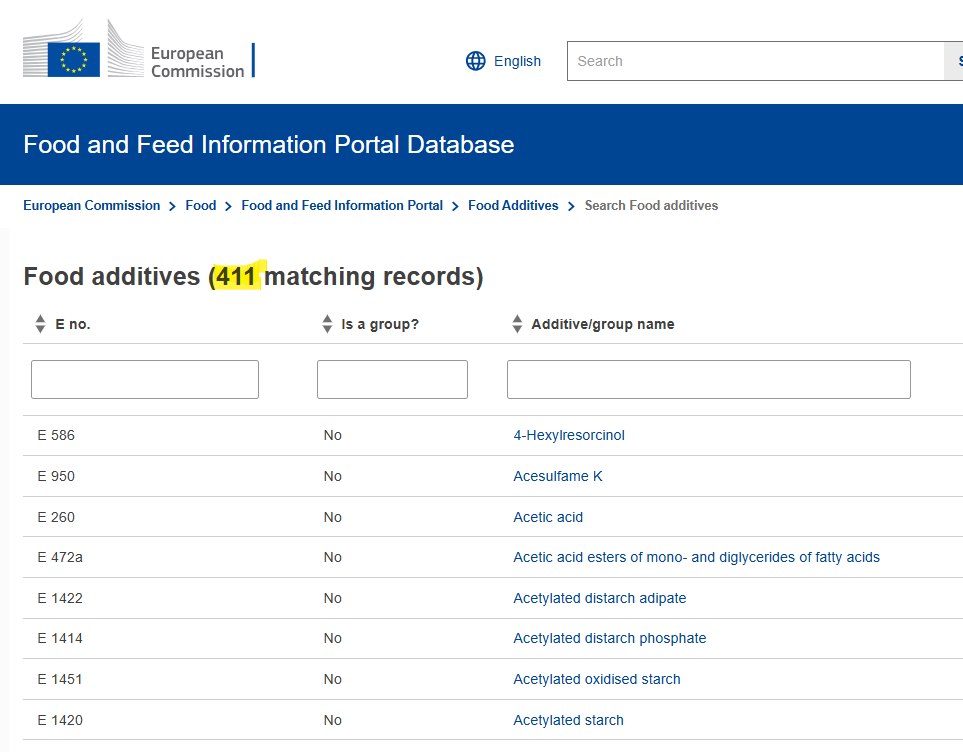
- Europe: The European Food Safety Authority (EFSA) has approved approximately 400 food additives.
- Japan: Approximately 1,500 food additives are permitted.
- Designated Additives: 476
- Existing food additives: 357
- Natural flavoring agents: 615
- Ordinary foods used as food additives: 140
- Korea: The Ministry of Food and Drug Safety has approved about 600 food additives, which is considerably fewer than major developed countries.
Temporary Standard Registration Procedure for Food Additives in Korea
Registering a temporary standard for food additives in Korea requires a complex procedure and demands significant time and resources. Below are the required materials, procedures, and timeframes for temporary standard registration.
1. Required Materials
- Basic Information: Name of food additive, chemical properties, manufacturing method, structural formula, etc.
- Safety Data:
- Toxicity test data (acute, subacute, chronic toxicity, carcinogenicity, reproductive toxicity, etc.)
- Genotoxicity test data
- Allergenicity data
- Other safety-related data
- Efficacy Data: Technical necessity, validity of intended use
- International Status: Usage status in foreign countries, evaluation data from international organizations (JECFA, EFSA, etc.)
- Standards and Specifications (Draft): Component specifications, purity standards, etc.
- Analytical Methods: Quantitative analysis methods for the additive
2. Application Procedure
- Preliminary Review Stage:
- Pre-consultation with the Ministry of Food and Drug Safety about the possibility of applying for temporary standards
- Confirmation of the scope and requirements of submitted materials
- Application Submission:
- Completion of application form for recognition of temporary standards and specifications for food additives
- Attachment of necessary data and supporting documents
- Review Stage:
- Document review by the Ministry of Food and Drug Safety
- Expert review by the Food Additives Division
- Request for additional data if necessary
- Official Gazette Announcement:
- After passing the review, announcement in the official gazette as a temporary standard
- Temporary standards are generally valid for 2 years
- Conversion to Regular Standards (if necessary):
- Based on safety data generated during the use of temporary standards
- Application for conversion to regular food additive standards is possible
3. Time Required
- Data Preparation: 6 months to 2 years (considerable time required to secure safety data such as toxicity tests)
- Review Process: Approximately 6 months to 1 year
- Total Time Required: Roughly 1 to 3 years (may be longer depending on circumstances)
The difficulty in registering temporary standards is due to complex review procedures, extensive safety data requirements, and strict review criteria. Even after registration, continuous domestic distribution cases and safety data must be secured for conversion to regular standards.
While these strict procedures are important for ensuring food safety, they can also delay the domestic introduction of additives that have already been verified for safety overseas.
Check with Meditip to see if you can register food additives without toxicity testing.
MEDITIP
Introduction 국내 및 세계유수의 바이오기업들의 한국, 미국, 유럽, 일본, 중국 등 글로벌시장의 인허가 업무, 보험업무, 임상업무, 사후관리, 배급업체의 발굴, 시장예비조사 등을 통하여, 바이오
www.meditip.co.kr
'Novel Food_Temporal standards' 카테고리의 다른 글
| Powdered extract of Aucuba japonica tree leaves (Vexpert Co., Ltd., No. 2024-9) (0) | 2025.02.17 |
|---|---|
| Novel food ingredient_King worm (0) | 2025.02.07 |
| Novel Food Registration in South Korea (0) | 2025.02.07 |


